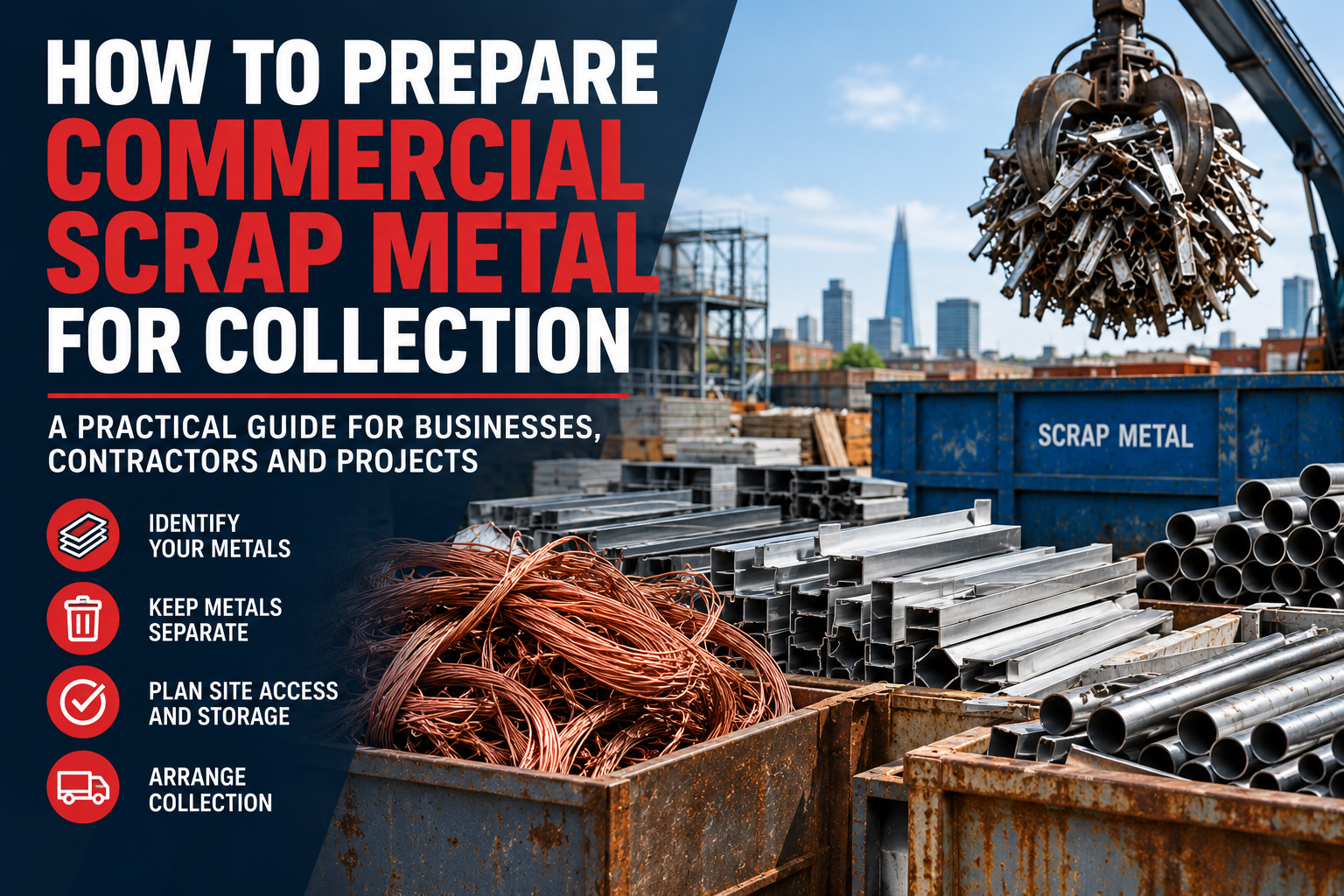
How to Prepare Commercial Scrap Metal for Collection
Commercial projects can generate large quantities of recyclable metal, particularly during office refurbishments, strip outs, construction work, demolition and industrial clearances.
Copper cable, structural steel, aluminium, pipework, machinery and other metal materials can quickly accumulate on site. Without a clear plan, recyclable materials can become mixed with general waste, take up valuable space or create unnecessary complications during a project.
Preparing commercial scrap metal before collection can help make the process more organised and efficient.
This guide explains how businesses, contractors, facilities managers and project teams can prepare commercial scrap metal for collection and recycling.
Why Preparing Scrap Metal Before Collection Matters
Commercial scrap metal collection is often part of a much larger project.
You may be managing:
- An office refurbishment
- A commercial strip out
- A CAT A or CAT B fit-out
- A demolition project
- A construction site
- A factory clearance
- A warehouse redevelopment
- Machinery replacement
- Mechanical and electrical works
- A building-services upgrade
Each of these projects can produce different types and quantities of scrap metal.
Taking a little time to identify and organise materials before collection can help:
- Keep recyclable metals separate from general waste
- Make site areas easier to manage
- Improve collection planning
- Help identify different types of metal
- Reduce unnecessary handling
- Support efficient recycling
- Make access and loading arrangements clearer
For larger projects, scrap metal collection should ideally be considered as part of the overall site and project-management plan.
1. Identify What Types of Scrap Metal You Have
The first step is understanding what materials are being generated.
Commercial sites can produce a mixture of both ferrous and non-ferrous metals.
Common materials include:
- Structural steel
- Mild steel
- Stainless steel
- Copper
- Aluminium
- Brass
- Lead
- Electrical cable
- Pipework
- Metal containment
- Machinery
- Plant equipment
You do not need to become a metal expert before arranging a collection. However, having a general understanding of what is being removed from the site can help with planning.
For example, an office strip out may generate significant quantities of cable trays, copper cable, ceiling grids and steel partitions, while an industrial clearance could involve machinery, structural steel and production equipment.
For a broader explanation of the metals businesses commonly generate, read:
Commercial Scrap Metal: What Businesses Need to Know About Collection & Recycling
2. Keep Different Metals Separate Where Practical
You do not always need to separate every piece of metal on a commercial project.
However, where it is practical and safe to do so, keeping different types of metal separate can make collection and recycling easier.
Typical materials that may be separated include:
- Copper
- Brass
- Aluminium
- Stainless steel
- Steel
- Lead
- Electrical cable
For example, copper pipework and electrical cable should not necessarily be treated in the same way as a large quantity of structural steel.
Similarly, aluminium frames, stainless steel equipment and brass fittings can be easier to identify when they have not been mixed unnecessarily with general site waste.
A simple approach can be:
Area One: Ferrous metals
Steel, iron and structural metal.
Area Two: Non-ferrous metals
Copper, aluminium, brass and lead.
Area Three: Electrical cable and wiring
Area Four: Mixed materials requiring assessment
The level of separation will depend on the size and nature of the project.
3. Keep Scrap Metal Separate From General Waste
One of the most important steps is preventing recyclable metal from becoming unnecessarily mixed with:
- Timber
- Plasterboard
- General rubbish
- Packaging
- Insulation
- Plastics
- Furniture
- Other construction waste
On busy commercial sites, it is easy for all materials to end up in the same waste area.
However, once recyclable metals become heavily mixed with other materials, sorting and handling can become more complicated.
Where possible, designate a specific area for recyclable metal.
This can be particularly useful during:
- Commercial strip outs
- Office refurbishments
- Demolition works
- Construction projects
- Factory clearances
The aim is not to create additional work for site teams. It is simply to avoid recyclable metal being unnecessarily lost amongst general site waste.
4. Remove Non-Metal Materials Where Safe and Practical
Some scrap metal will have other materials attached to it.
Examples may include:
- Plastic coverings
- Timber
- Rubber
- Insulation
- Fixtures
- Non-metal components
Where it is safe and practical to do so, separating obvious non-metal materials can help make the metal easier to identify and process.
However, this should not create unnecessary work or introduce safety risks.
For larger or more complicated items, it is often better to discuss the material with your collection provider rather than attempting to dismantle equipment unnecessarily.
This is particularly important with:
- Machinery
- HVAC systems
- Industrial plant
- Electrical equipment
- Large structural components
5. Keep Electrical Cable Separate
Electrical cable can be a significant source of recyclable metal on commercial projects.
It is commonly generated during:
- Office strip outs
- Data centre upgrades
- Building refurbishments
- M&E projects
- Factory clearances
- Electrical upgrades
- Demolition works
Where practical, keeping electrical cable separate from general waste and heavy steel can make collection easier.
Different types of cable can contain varying amounts of metal, and cable may also have different insulation or protective materials attached.
You do not necessarily need to strip cable before collection.
In fact, unless there is a specific reason for doing so, unnecessary processing on site may simply create additional work.
The best approach is generally to keep cable identifiable and separate where practical, then discuss the material with your commercial scrap metal collector.
6. Estimate the Quantity of Scrap Metal
Before arranging a collection, it is useful to have a rough idea of how much material is involved.
You do not need an exact weight.
An estimate such as the following can still be useful:
- A small amount
- Several pallets
- One skip-sized quantity
- Several tonnes
- Regular quantities generated throughout the project
It can also help to identify whether the material includes:
- Heavy steel
- Structural components
- Machinery
- Large plant
- Cable
- Mixed metals
This information helps with planning the right collection method and arranging suitable equipment where required.
For high-volume commercial projects, the quantity and type of material can also influence the potential value of the load.
7. Plan Where Scrap Metal Will Be Stored Before Collection
Commercial sites often have limited space.
This can be particularly challenging in Central London, busy commercial districts and live construction projects.
Before collection, consider:
- Where the metal will be stored
- Whether the area is secure
- Whether vehicles can access the collection point
- Whether the material needs to be moved before collection
- Whether loading equipment may be required
- Whether other contractors need access to the same area
The collection area should not obstruct:
- Emergency routes
- Pedestrian access
- Site operations
- Loading areas
- Other contractors
For larger projects, it can be helpful to establish a dedicated material holding area as part of the site logistics plan.
8. Check Vehicle Access Before Collection
Access is one of the most important practical considerations for commercial scrap metal collection.
Before collection, consider:
Can a collection vehicle access the site?
Check:
- Site entrances
- Height restrictions
- Weight restrictions
- Narrow roads
- Loading bays
- Security gates
Is there a suitable loading area?
The collection team may need access to:
- A loading bay
- A yard
- A designated site area
- A service road
Are there time restrictions?
Commercial buildings may have:
- Restricted delivery times
- Booking systems
- Security requirements
- Out-of-hours access arrangements
Providing this information before collection can help avoid delays on the day.
This is especially important for commercial projects operating to tight refurbishment or construction programmes.
9. Consider the Weight and Size of the Materials
Not all commercial scrap metal can be moved manually.
Projects may involve:
- Structural steel
- Large machinery
- Heavy plant
- Steel beams
- Industrial equipment
- Chillers
- HVAC equipment
- Production-line equipment
These materials may require additional planning.
Before collection, it can be useful to identify:
- Approximate dimensions
- Approximate weight
- Whether the material is already accessible
- Whether equipment is required to move it
- Whether dismantling has already taken place
Avoid moving heavy materials unless it is safe and appropriate to do so.
For larger commercial projects, collection and loading arrangements should be discussed in advance.
10. Coordinate Scrap Metal Collection With Your Project Schedule
One of the most effective ways to manage commercial scrap metal is to plan collection around the wider project programme.
Rather than waiting until the end of a project, collections may be arranged at appropriate stages.
For example:
During an Office Strip Out
Collect metal as:
- Cable is removed
- Ceiling systems are dismantled
- Partitions are removed
- Building services are stripped out
During Construction
Collections may be planned around:
- Steel offcuts
- Electrical works
- Mechanical installation
- Temporary works
- Equipment replacement
During Demolition
Metal recovery may form part of:
- Building dismantling
- Structural removal
- Site clearance
- Material segregation
This approach can help prevent large quantities of recyclable material from accumulating unnecessarily on site.
Preparing Scrap Metal During Commercial Strip Outs
Commercial strip outs are one of the most common sources of scrap metal.
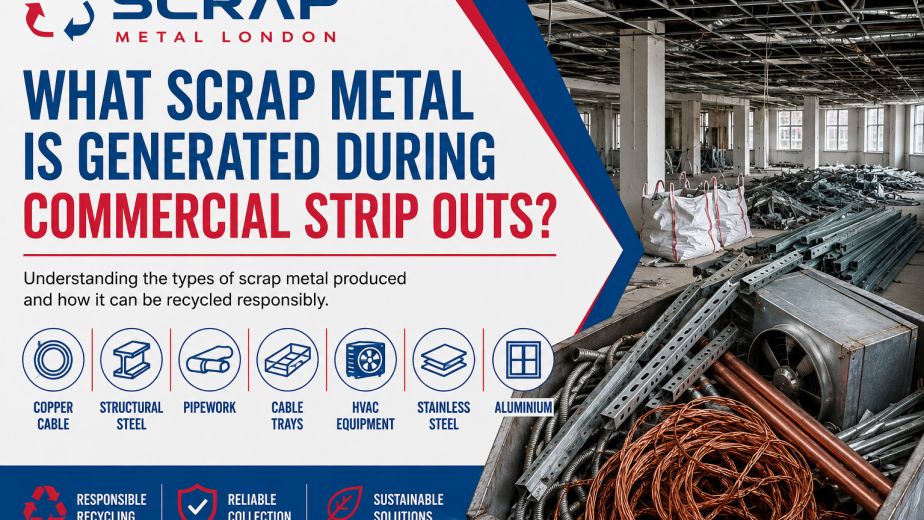
Office, retail and industrial strip outs can generate materials including:
- Copper cable
- Cable trays
- Steel partitions
- Metal ceiling grids
- Pipework
- Electrical containment
- HVAC components
- Aluminium
- Stainless steel
Where practical, project teams should identify recyclable metal as stripping progresses rather than waiting until all materials have been mixed together.
A dedicated area for metal recovery can help keep the project organised.
Preparing Scrap Metal on Construction Sites
Construction projects can generate scrap metal throughout the build.
Common examples include:
- Steel offcuts
- Reinforcement steel
- Copper pipework
- Electrical cable
- Aluminium
- Metal containment
- Mechanical equipment
The amount generated can vary significantly depending on the scale of the project.
A good approach is to establish a clear process with site managers and contractors.
This may include:
- Identifying recyclable metal.
- Keeping it away from general waste.
- Using a designated storage area.
- Monitoring quantities.
- Arranging collection when required.
Planning metal collection alongside other site-waste arrangements can help avoid unnecessary disruption.
Preparing Scrap Metal for Factory and Warehouse Clearance
Industrial premises can present different challenges.
Factory and warehouse projects may involve:
- Machinery
- Production equipment
- Steel racking
- Conveyor systems
- Electrical infrastructure
- Pipework
- Industrial plant
Before collection, it is useful to establish:
What equipment is being removed?
Has machinery been disconnected?
Does equipment require specialist handling?
Is there suitable vehicle access?
Does the material need to be dismantled?
Is there sufficient space for loading?
Large industrial clearances often benefit from advance planning because materials can be significantly heavier and more complex than typical commercial strip-out scrap.
Do You Need to Clean Scrap Metal Before Collection?
Not necessarily.
Scrap metal does not need to be perfectly clean before collection.
However, where practical, keeping recyclable metal separate from excessive amounts of general waste can make the collection and recycling process easier.
The key difference is between:
Reasonable site preparation
and
Unnecessary processing work.
For example, there may be no benefit in spending significant time trying to dismantle complicated machinery simply to separate every individual component.
If you are unsure how to prepare a particular item, it is better to discuss it before collection.
What Information Should You Provide Before Booking a Collection?
The more relevant information provided in advance, the easier it is to plan a commercial collection.
Useful information can include:
Type of Project
For example:
- Office refurbishment
- Commercial strip out
- Construction
- Demolition
- Factory clearance
- Warehouse clearance
Types of Metal
If known:
- Steel
- Copper
- Aluminium
- Brass
- Cable
- Mixed metals
Approximate Quantity
An estimate of the volume or weight involved.
Site Location
Including:
- Postcode
- Site entrance details
- Loading area
Access Requirements
Including:
- Vehicle restrictions
- Booking systems
- Security procedures
- Delivery times
Collection Timescale
For example:
- Immediate
- During the project
- On completion of the strip out
- Scheduled weekly
- Scheduled as required
This information allows collections to be planned around the requirements of the project.
Safety Considerations When Preparing Scrap Metal
Commercial sites should always follow their own site-specific health and safety procedures.
When preparing materials for collection:
- Do not move heavy metal manually where it is unsafe.
- Keep sharp or potentially hazardous materials appropriately managed.
- Do not dismantle unfamiliar equipment unnecessarily.
- Keep collection areas organised.
- Avoid obstructing site access routes.
- Follow the relevant site rules and risk assessments.
Particular care may be required when dealing with:
- Heavy structural materials
- Machinery
- Electrical equipment
- HVAC systems
- Industrial plant
Collection arrangements should be suitable for the materials involved.
Waste Documentation and Responsible Disposal
Businesses handling commercial waste have responsibilities regarding how that waste is managed.
The Government’s waste duty of care guidance explains that businesses dealing with waste should manage it responsibly and ensure it is transferred to appropriately authorised organisations.
When arranging commercial scrap metal collection, it is sensible to ensure that the provider can handle the materials appropriately and provide the relevant documentation for the collection.
External resource:
GOV.UK Waste Duty of Care Code of Practice
Scrap metal dealers operating in England and Wales are also subject to licensing requirements under the Scrap Metal Dealers Act framework.
External resource:
GOV.UK Scrap Metal Dealer Licence Guidance
A Simple Commercial Scrap Metal Collection Checklist
Before arranging collection, work through this checklist.
✓ Identify the materials
Do you know broadly what types of metal are involved?
✓ Keep recyclable metal separate
Where practical, prevent metal from being mixed with general waste.
✓ Keep cable identifiable
Separate electrical cable where possible.
✓ Estimate the quantity
A rough estimate is usually sufficient for initial planning.
✓ Check site access
Can collection vehicles access the site safely?
✓ Identify heavy or oversized materials
Make sure machinery, plant or structural steel is identified in advance.
✓ Plan a collection area
Avoid blocking site operations or access routes.
✓ Coordinate with your project programme
Arrange collection at the most practical stage of the project.
✓ Provide relevant site information
Include access requirements, collection times and site procedures.
✓ Use an appropriate commercial collection service
Ensure the collection arrangements are suitable for the materials and scale of the project.
Preparing Scrap Metal Can Make Commercial Projects Easier to Manage
Scrap metal is often generated gradually throughout a commercial project.
Without planning, it can take up valuable space, become mixed with other waste or create unnecessary handling later.
By identifying recyclable materials early, keeping them organised and planning access before collection, businesses and contractors can make the process more straightforward.
This is particularly useful for:
- Commercial strip outs
- Office refurbishments
- Construction projects
- Demolition works
- Factory clearances
- Warehouse clearances
- Building-services upgrades
For high-volume projects, planning commercial scrap metal collection as part of the wider project programme can help keep the site organised from start to finish.
Areas We Cover
We provide commercial scrap metal collection across:
Including boroughs such as:
Frequently Asked Questions
Do I need to separate different types of scrap metal before collection?
Not always. However, where practical, keeping different metals such as copper, aluminium, brass and steel separate can make identification and recycling easier.
Should electrical cable be kept separate from other scrap metal?
Where practical, yes. Electrical cable can be kept separate from general waste and heavy steel to make the collection process easier.
Do I need to clean scrap metal before collection?
No. Scrap metal does not need to be perfectly clean, but recyclable metal should ideally be kept separate from excessive amounts of general waste where practical.
How do I prepare a large quantity of commercial scrap metal?
Identify the materials, estimate the quantity, plan a storage area, check site access and provide the relevant information before collection.
Can scrap metal be collected during a construction project?
Yes. Collections can be coordinated with construction programmes and arranged at suitable stages of the project.
What information should I provide before arranging collection?
Provide details about the type of project, materials involved, approximate quantity, site location, access requirements and preferred collection timescale.
Do I need to dismantle machinery before scrap metal collection?
Not necessarily. Large machinery and industrial equipment may require specific handling arrangements, so it is best to discuss the item before collection rather than dismantling it unnecessarily.
Can commercial strip-out contractors arrange regular scrap metal collections?
Yes. Depending on the project, collections can potentially be scheduled around the strip-out programme and the quantity of material being generated.
Need Commercial Scrap Metal Collection in London?
If you are managing a commercial strip out, office refurbishment, construction project, demolition site, factory clearance or warehouse redevelopment, preparing your scrap metal in advance can help make collection easier.
Scrap Metal London provides commercial and industrial scrap metal collection across Greater London, supporting contractors, developers, businesses and facilities managers with high-volume metal recovery and recycling.
Scrap Metal London provides commercial scrap metal collection across London.
Telephone: 01753 983353
Email: info@scrapmetal-london.co.uk