What happens to scrap metal after a demolition project?
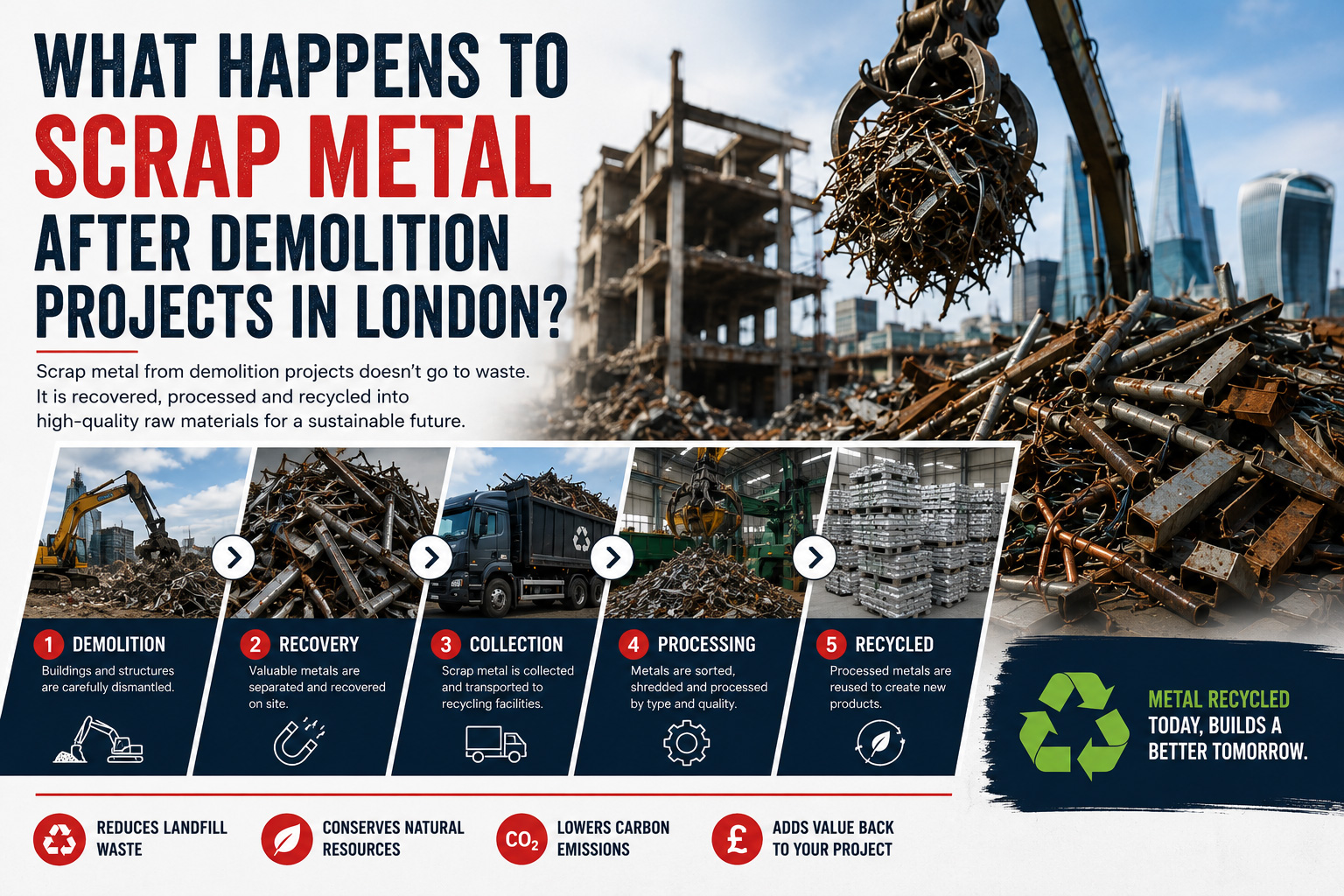
After demolition projects, scrap metal is separated from other materials, collected from site, transported to recycling facilities and processed into reusable raw materials. Metals such as steel, copper, aluminium and brass can often be recycled multiple times without losing their quality.
Why Demolition Projects Generate Large Volumes of Scrap Metal
Demolition projects are one of the largest sources of recyclable metal in the construction industry.
As buildings, warehouses, factories and commercial properties are dismantled, substantial quantities of metal can be recovered rather than disposed of as waste.
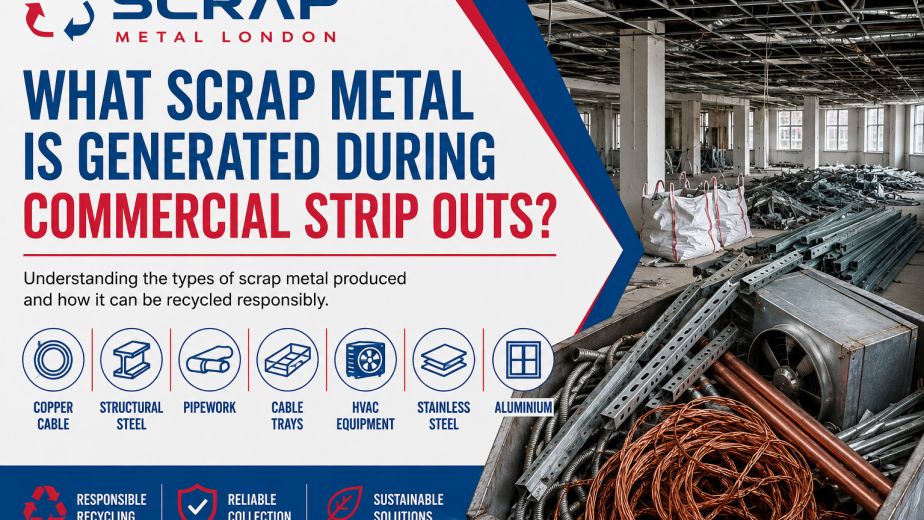
Common sources include:
- Structural steel beams
- Reinforcement steel
- Copper cabling
- Pipework
- Mechanical equipment
- HVAC systems
- Lift infrastructure
- Metal framework
Many of these materials retain significant recycling value.
The Scrap Metal Recovery Process
1. Identifying Recyclable Metals
Before demolition begins, contractors often identify valuable recyclable materials that can be recovered during the project.
This may include:
- Copper
- Steel
- Aluminium
- Brass
- Stainless steel
Early planning helps maximise recycling opportunities.
2. Segregation During Demolition
As demolition progresses, metals are separated from:
- Concrete
- Timber
- Plastics
- General construction waste
Segregation improves recycling efficiency and helps maintain cleaner waste streams.
3. Collection & Removal
Recovered scrap metal is collected from site and transported for processing.
Projects may involve:
- Commercial demolition
- Industrial demolition
- Warehouse demolition
- Factory decommissioning
- Site clearance works
4. Processing & Recycling
At recycling facilities, metals are:
- Sorted
- Graded
- Processed
- Prepared for reuse
Steel, copper and aluminium are commonly reintroduced into manufacturing supply chains.
Which Metals Are Commonly Recycled After Demolition?
Structural Steel
One of the most frequently recovered materials from demolition projects.
Commonly found in:
- Warehouses
- Commercial buildings
- Industrial facilities
- Data centres
Copper
Highly recyclable and frequently recovered from:
- Electrical systems
- Cable infrastructure
- Mechanical installations
Aluminium
Recovered from:
- Window systems
- Cladding
- HVAC installations
Stainless Steel
Often found in:
- Industrial facilities
- Commercial kitchens
- Plant equipment
Demolition Recycling Benefits
Reduced Landfill Waste
Recovering recyclable metals helps reduce disposal volumes.
Improved Sustainability
Recycling metal significantly reduces demand for virgin raw materials.
Better Project Efficiency
Organised scrap metal recovery improves site management and housekeeping.
Environmental Compliance
Supports sustainability objectives and responsible waste management practices.
Scrap Metal Recovery from Commercial Buildings
Commercial demolition projects often generate valuable recyclable materials.
Examples include:
- Office blocks
- Retail units
- Shopping centres
- Hotels
- Mixed-use developments
Find out more about Scrap Metal from Strip Outs London
Scrap Metal Recovery from Industrial Sites
Industrial facilities can contain substantial quantities of recyclable metal.
Examples include:
- Factories
- Manufacturing facilities
- Warehouses
- Distribution centres
- Processing plants
The Role of Scrap Metal Recycling in London’s Circular Economy
Construction and demolition industries play an important role in reducing waste and improving sustainability.
Recycling scrap metal allows materials to remain in circulation and be reused across future projects.
This helps:
- Reduce landfill dependency
- Lower carbon emissions
- Improve resource efficiency
- Support environmental targets
Areas We Cover
We provide scrap metal collection services throughout:
Frequently Asked Questions
What metals can be recovered from demolition projects?
Steel, copper, aluminium, brass, stainless steel and many other metals can be recovered and recycled.
Can structural steel be recycled?
Yes. Structural steel is one of the most commonly recycled materials recovered from demolition projects.
Is copper recovered during demolition?
Yes. Copper cable and pipework are regularly recovered from commercial and industrial buildings.
What happens to scrap metal after collection?
It is sorted, processed and recycled into reusable raw materials.
Do demolition projects produce valuable scrap metal?
Yes. Many demolition projects generate substantial quantities of recyclable metals.
External Resource
For further information regarding construction waste management and recycling obligations:
UK Government Waste Guidance:
Need Demolition Scrap Metal Recovery in London?
Whether you’re managing a commercial demolition, warehouse redevelopment, factory decommissioning or site clearance project, professional scrap metal recovery helps maximise recycling opportunities and improve project efficiency.
Contact our team today to discuss your project requirements.
Telephone: 01753 983353
Email: info@scrapmetal-london.co.uk