
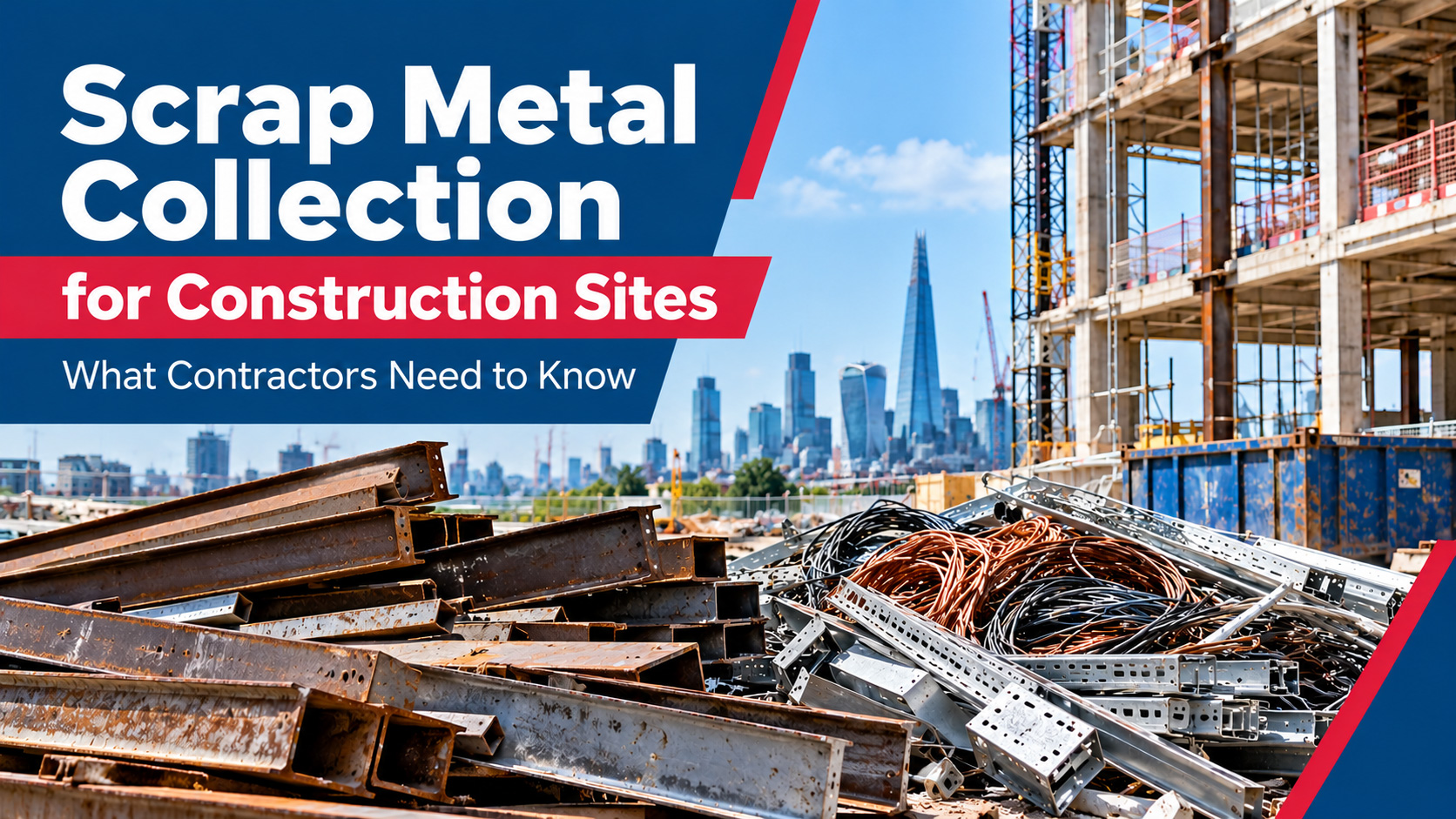
Construction projects generate significant quantities of scrap metal, from structural steel and copper cabling to aluminium framework, pipework and redundant mechanical equipment. For contractors working across London, arranging an organised scrap metal collection can help keep sites clear, improve material segregation and ensure recyclable metals are recovered rather than unnecessarily sent for disposal.
Whether you are managing a new-build development, a commercial refurbishment, an office fit-out or a major construction project, understanding how construction site scrap metal collection works can make waste management easier to coordinate.
In this guide, we explain the types of scrap metal generated on construction sites, how to prepare materials for collection and what contractors should consider when arranging a commercial scrap metal collection in London.
What Is Construction Site Scrap Metal Collection?
Construction site scrap metal collection involves the removal and recovery of recyclable metal generated during building, refurbishment, installation, strip-out and demolition work.
Instead of allowing recoverable metal to become mixed with general construction waste, contractors can arrange for suitable materials to be collected separately and directed towards appropriate recycling or recovery routes.
Commercial construction scrap metal may include:
Structural steel, beams and metal sections
Copper pipework and electrical cable
Aluminium frames, sections and components
Stainless steel fixtures and equipment
Brass fittings, valves and plumbing components
Metal trunking, cable tray and conduit
Redundant heating, ventilation and air-conditioning components
Metalwork removed during commercial strip-outs
Offcuts and surplus metal from installation work
The type and quantity of material will depend on the project, its stage and the trades working on site.
For larger developments and commercial projects, planned scrap metal collection can form part of the wider site clearance and waste management arrangements.
What Types of Scrap Metal Are Generated on Construction Sites?
Different construction activities produce different types of recyclable metal. Identifying these materials early helps contractors plan storage, segregation and collection.
1. Structural Steel and Metal Sections
Structural steel can be generated during alterations, dismantling, refurbishment and demolition work. Other examples include metal brackets, supports, fixings, sections and redundant steelwork.
Larger quantities may arise when contractors remove structural components or dismantle redundant installations as part of a wider redevelopment.
Where steel is being removed, contractors should coordinate the work with the relevant structural engineer and demolition or dismantling team. Scrap collection must never interfere with structural stability or the approved method of work.
2. Copper Pipework and Electrical Cable
Copper is commonly found in commercial buildings, particularly in electrical installations, plumbing systems and mechanical services.
Construction and refurbishment projects may generate copper scrap from:
Redundant electrical cabling
Copper pipework
Mechanical installations
Heating and plumbing systems
Decommissioned building services
Cable and pipework should be handled in accordance with the project’s electrical, isolation and hazardous-material procedures. Contractors should not remove services until they have been confirmed as safe to work on.
3. Aluminium Framework and Components
Aluminium can be recovered from a range of construction and refurbishment activities, including the removal of window frames, door frames, partitions, cladding components and other aluminium sections.
Keeping suitable aluminium separate from mixed waste can make it easier to identify and recover the material.
Where components contain glass, insulation, plastics or other attached materials, contractors should clarify whether these need to be removed before collection.
4. Stainless Steel, Brass and Other Metals
Commercial projects may also generate stainless steel equipment, brass fittings, valves, metal fixtures and other non-ferrous materials.
These can arise during plumbing upgrades, kitchen and catering installations, plant replacement, commercial refurbishments and building services work.
Where practical, different metal types should be separated and clearly identified. Mixed or contaminated loads may need additional assessment before collection.
5. Mechanical and Electrical Equipment
Mechanical and electrical works can generate scrap metal from redundant plant, pipework, cable containment, metal enclosures and equipment components.
Examples include materials removed during heating system upgrades, ventilation replacements, electrical refurbishments and plant-room decommissioning.
Some equipment may contain refrigerants, oils, batteries or other controlled substances. These items require the appropriate handling and treatment arrangements and should not automatically be treated as ordinary scrap metal.
Why Should Contractors Arrange Dedicated Scrap Metal Collection?
For commercial construction projects, scrap metal collection should be considered as part of the site logistics and waste management plan rather than an afterthought.
Keep Work Areas Clear and Organised
Metal offcuts, redundant components and dismantled materials can accumulate quickly, particularly when several trades are working in the same area.
A planned collection helps contractors manage designated storage areas and reduce the build-up of recyclable metal around active work zones.
Materials must still be stored safely, with suitable access routes and pedestrian areas kept clear.
Improve Material Segregation
Separating recyclable metals from general construction waste can help contractors identify materials suitable for recovery and reduce unnecessary mixing.
A clear segregation process also makes it easier to track what has been removed from site and coordinate collections with other waste management activities.
Support Project Waste Management Objectives
Many commercial construction projects have waste management requirements, environmental targets or reporting procedures.
Keeping records of collections and waste transfers can support these processes. Contractors should ensure that the arrangements align with their project requirements and applicable waste legislation.
Coordinate Collections With the Construction Programme
The best time to collect scrap metal depends on the volume of material, site access, available storage and the progress of the works.
Some projects may benefit from collections at agreed stages, such as after mechanical and electrical installation, during a commercial strip-out or following the removal of redundant plant.
For larger projects, collection arrangements should be agreed with the site manager or logistics team before materials begin to accumulate.
How to Prepare a Construction Site for Scrap Metal Collection
Good preparation helps make collections more straightforward and reduces the likelihood of delays.
1. Identify the Materials Available
Establish which metals are being generated and whether they are suitable for collection. If possible, estimate the likely quantity and identify any large, awkward or unusually heavy items.
Photographs and a brief description of the materials can help when discussing the job with a scrap metal collection contractor.
2. Separate Metals Where Practical
Keep identifiable metals separate where site conditions allow. For example, structural steel, copper, aluminium and mixed metal components can be placed in designated areas or containers.
Do not spend time dismantling materials unnecessarily without first checking what is required. The collection provider can advise on the preparation needed for the specific load.
3. Remove Non-Metal Waste Where Appropriate
Timber, plasterboard, packaging, insulation and other non-metal materials should not be mixed into scrap loads unless the collection arrangement specifically allows for them.
Where metal components are attached to glass, plastics or other materials, confirm whether separation is necessary before collection.
4. Check Site Access and Loading Requirements
Construction sites can have restricted access, vehicle movement controls, delivery schedules and limited loading space.
Before booking, consider:
The site entrance and vehicle access restrictions
Available loading and collection areas
Vehicle height, weight or time restrictions
Site induction and PPE requirements
Whether lifting equipment or additional handling arrangements are needed
Any restrictions affecting the collection time
Providing accurate information in advance helps the collection provider assess the requirements.
5. Agree the Collection Timing
Coordinate the collection with the site manager, subcontractors and any relevant demolition or strip-out teams.
For projects generating large or continuous volumes of scrap, discuss whether staged collections are more suitable than waiting until the end of the works.
The collection schedule should account for safe loading, site operations and the need to keep access routes clear.
6. Confirm Documentation and Responsibilities
Before collection, establish who is responsible for preparing the material, loading it, arranging transport and retaining the relevant documentation.
Under UK waste duty of care requirements, businesses must take reasonable steps to ensure waste is handled and transferred appropriately. Depending on the circumstances, this can include checking the relevant waste carrier or dealer registration and completing the required waste transfer documentation.
Scrap metal transactions may also be subject to the Scrap Metal Dealers Act 2013 and associated requirements. The applicable arrangements depend on the activity and parties involved, so contractors should confirm the relevant requirements for their project.
When Should You Arrange Construction Scrap Metal Collection?
There is no single collection schedule suitable for every construction project. The right approach depends on the amount of metal produced, the available storage space and the sequence of the works.
Common opportunities include:
During construction: collect accumulated metal offcuts and redundant materials generated by installation trades.
During M&E works: arrange collection of suitable scrap from pipework, cable containment and plant replacement once the relevant services have been made safe.
During commercial strip-outs: coordinate metal recovery with the removal of partitions, fittings, equipment and building services.
During demolition and dismantling: plan the recovery of suitable metal as part of the agreed sequence of work.
Before project handover: remove remaining recyclable metal and clear designated storage areas.
For busy London sites, early planning is particularly useful where access is restricted or several contractors need to share loading and storage areas.
How Does Commercial Scrap Metal Collection Work?
Although individual projects differ, a typical commercial scrap metal collection follows several stages.
Step 1: Discuss the project. Explain the type of work taking place, the materials available, approximate quantities and the site location.
Step 2: Assess the collection requirements. The collection provider can establish whether further information, photographs, a site assessment or specific access arrangements are needed.
Step 3: Prepare the materials. The contractor or site team identifies suitable scrap metal and arranges safe storage and segregation.
Step 4: Coordinate the collection. Agree a suitable time, vehicle access, loading arrangements and any site-specific safety requirements.
Step 5: Collect and transport the material. The collection is carried out in accordance with the agreed arrangements and applicable requirements.
Step 6: Recover and recycle suitable metals. Collected material is directed through appropriate recovery and recycling processes. The final route depends on the material, its condition and any contamination or treatment requirements.
The precise process, documentation and loading responsibilities should be confirmed before the collection takes place.
Can Contractors Arrange Scrap Metal Collection During Strip-Outs and Demolition?
Yes. Scrap metal collection can be coordinated with commercial strip-out, dismantling and demolition projects, provided the work sequence and site safety arrangements allow for it.
During a commercial strip-out, recyclable metal may come from electrical installations, plumbing, suspended systems, mechanical equipment, metal partitions and redundant fixtures.
Demolition and dismantling projects can generate larger quantities of structural steel, metal sections and other recoverable materials.
Where metal recovery forms part of a wider clearance programme, contractors should coordinate collection with the principal contractor, site manager and relevant demolition team. Structural components, live services and potentially hazardous materials must be dealt with under the appropriate procedures before collection.
For related information, see our guides to scrap metal from commercial strip-outs and commercial scrap metal recovery from demolition projects.
What Affects the Cost or Value of Construction Scrap Metal Collection?
The cost or potential value of a collection depends on the specific project and materials involved. It should not be assumed that every scrap load will generate a payment or that collection will always be free.
Factors that may affect the arrangement include:
The type and quantity of metal
The proportion of recoverable metal in the load
The condition of the material and any contamination
Whether different metals are mixed together
Site access, loading requirements and handling time
Vehicle requirements and the distance involved
Whether additional treatment or processing is necessary
Current market conditions for relevant scrap metals
If the project includes significant quantities of copper, aluminium, steel or other recoverable metals, provide an accurate description of the load when requesting an assessment.
For further guidance, read our article on how to prepare commercial scrap metal for collection.
Commercial Construction Scrap Metal Collection Across London
Scrap Metal London supports commercial and industrial scrap metal collection requirements across London, helping businesses arrange the removal and recovery of suitable metal from a range of project types.
Our service is relevant to contractors and organisations involved in:
Commercial construction and refurbishment
Office and retail fit-outs
Mechanical and electrical installations
Commercial strip-outs
Demolition and dismantling
Factory and warehouse clearance
Data centre and plant-room projects
Air-conditioning and chiller removal
Whether your project is generating structural steel, copper pipework, aluminium components or mixed commercial scrap, the collection requirements can be discussed in advance.
Visit our Commercial Scrap Metal Collection London service page to learn more, or contact our team to discuss your project, the materials available and the site access arrangements.
Areas We Cover
We provide commercial scrap metal collection across:
Including boroughs such as:
Frequently Asked Questions
What scrap metal can be collected from construction sites?
Depending on the collection arrangements, suitable materials can include steel sections, copper pipework and cable, aluminium frames, stainless steel, brass fittings, metal trunking, cable tray and redundant mechanical components. Materials should be assessed for contamination, attached waste and any special handling requirements.
Do construction contractors need to separate different metals?
Separating metals where practical can make identification, handling and recycling easier. The best approach depends on the materials, quantity and site conditions. Confirm any preparation requirements with the collection provider before dismantling or sorting large items.
Can scrap metal be collected from an active construction site?
Potentially, yes. Collections can be arranged around active construction work where safe access, loading arrangements and site procedures permit. Site management should coordinate the collection to avoid conflicts with deliveries, lifting operations and other trades.
Can scrap metal be collected during a commercial strip-out?
Yes. Suitable metal can be recovered during office refurbishments, retail fit-outs and other commercial strip-out projects. Collection should be coordinated with the strip-out sequence, isolation procedures and wider waste management plan.
Is construction scrap metal collection free?
Not necessarily. The terms depend on the metal types, quantities, condition, access requirements and collection costs. Some loads may have recoverable value, while others may involve handling, transport or processing charges. Confirm the arrangement before booking.
Do contractors need waste transfer documentation?
Businesses must comply with applicable waste duty of care requirements. Depending on the material and circumstances, appropriate waste transfer documentation and checks may be required. Contractors should confirm the correct documentation and responsibilities for each collection.
How do I arrange a commercial scrap metal collection in London?
Provide the site location, a description of the metals, an approximate quantity, photographs where available and details of access or loading restrictions. This information helps the collection provider assess the requirements and discuss the next steps.
Arrange Construction Site Scrap Metal Collection in London
Planning a construction, refurbishment, strip-out or demolition project? Organising scrap metal collection early can help keep recyclable materials separate and coordinate their removal with the wider site programme.
Contact Scrap Metal London to discuss your commercial scrap metal collection requirements.
Telephone: 01753 983353
Email: info@scrapmetal-london.co.uk
Tell us about your project, the types of metal being generated and your site access arrangements so we can discuss a suitable collection approach.


